Author: Sean Fitzpatrick, Executive Director
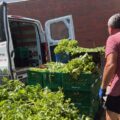
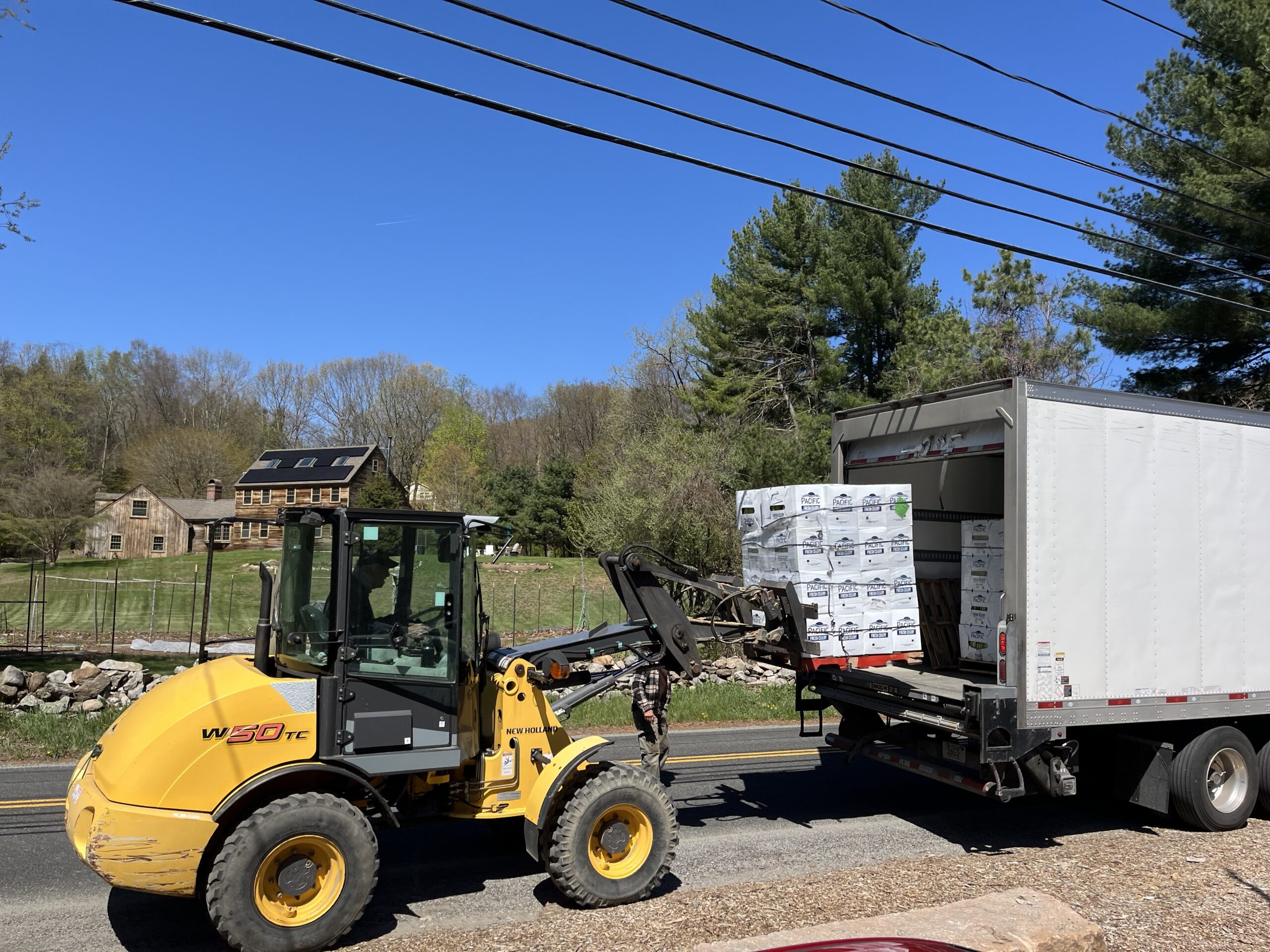
Last week, a tractor trailer’s worth of celery, more than 15,000 pounds of it, moved through Real Food CT’s network and into the hands of food pantries across our region. The load came to us from our partners at Boston Area Gleaners, who had received it through their relationships with national food recovery organizations and warehouse distributors. Within days, that celery was on tables in homes throughout Connecticut.
It was, by any measure, a successful distribution. It was also a glimpse of where this work is going.
What Institutional Surplus Actually Is
When most people picture food recovery, they picture a farmer with extra zucchini, or a grocery store nearing a sell-by date. Those are real and important sources, and they are part of how we operate every day. But there is another category of recoverable food that rarely gets discussed in community settings: institutional surplus.
Institutional surplus is wholesome, often perfectly fresh food that exits the commercial supply chain before it ever reaches a retail shelf. It can come from manufacturers, regional distribution warehouses, food service operators, and large-scale shippers. The reasons it becomes available are mostly logistical, ranging from spec changes and over-ordered pallets to label revisions or trucks that arrived a day later than planned. None of those reasons have anything to do with food quality, and none of them have anything to do with whether the people in our communities could use the food.
ReFED, the leading nonprofit research organization studying food waste in the United States, estimates that roughly a third of the country’s food supply goes unsold or uneaten each year, with manufacturing, distribution, and food service representing a substantial share of that loss. The USDA’s Economic Research Service has tracked similar patterns for years. Recoverable food and unmet need both sit in abundance across our region, and the real challenge has always been the connective tissue between them.
That connective tissue is what Real Food CT is building.
How the Celery Got Here
Boston Area Gleaners, with whom we have built a strong working relationship, has institutional partnerships that include collaborations with national and regional food rescue partners, as well as with warehouse distributors who occasionally have surplus loads to release. When a 15,000+ pound load of celery became available, BAG had the relationships to receive it, and Real Food CT had the network to move it across Connecticut.
That division of labor matters. BAG operates upstream at the source, while Real Food CT operates downstream at the community level, with deep relationships across more than thirty pantries and food access partners in our region. When the two sides connect, large amounts of food can move quickly and meaningfully, and the celery distribution is just one of what we expect to be many such examples going forward.
We have had similar opportunities in the past with Food Rescue US, and we are in active conversation with several other national and regional food rescue partners and Connecticut warehouse distribution operators about how to expand this kind of recovery on a regular basis.
Why This Complements What We Already Do
Real Food CT was built on a single guiding idea: maximize available resources. From day one, that has meant farming available land that would otherwise sit unused, and recovering surplus from local farms that would otherwise be tilled in or composted. Our gleaning program and our community farm model are direct expressions of that idea.
Institutional surplus is the same idea applied at a different point in the food system. The food has already been grown, harvested, packed, and shipped, and all that remains is the last mile, which is exactly what regional nonprofit infrastructure is built to handle.
Each of these streams plays a different role inside the same operating philosophy. Gleaning lets us recover what farms cannot economically harvest, our community farm program lets us produce what would not otherwise be grown, and institutional surplus recovery lets us capture what the commercial system cannot economically distribute. Together they reinforce one another, and each one strengthens our capacity to deliver on the others.
The Infrastructure Question
There is a reason every conversation about institutional surplus in Connecticut eventually arrives at the same point: we do not have the infrastructure for it. The state currently lacks a regional cold storage hub built for this purpose, a shared refrigerated trucking pool for nonprofit food recovery, and aggregation space designed for the volumes that institutional partners can release on short notice.
This is precisely why Real Food CT is pursuing the Naugatuck Valley Food System Infrastructure Project. The vision behind that project, currently in concept planning with our design partners, is to give Connecticut a regional farm and food hub with the cold storage, refrigerated transport, and aggregation capacity needed to operate at this level. With that infrastructure in place, the kind of celery distribution we just executed becomes routine instead of exceptional.
It also positions Connecticut as a serious destination for institutional partners. National and regional food rescue partners, regional gleaners like BAG, and large warehouse distributors all need credible state-level partners they can rely on, and right now Connecticut does not have a clear answer to that need. We intend to be it.
Bringing Communities Together Around Available Resources
What I keep coming back to is how simple this is at its heart. The food, the land, the people willing to move it, and the neighbors who could use it are all already in place across our region. The only things missing are the willingness, the relationships, and the infrastructure to bring those pieces together.
A 15,000 pound celery distribution is not really the headline. The headline is what becomes possible when a community decides that available resources will not be wasted, and the through line that connects farms, fields, warehouses, and the families who need fresh food remains the same regardless of where in the system the recovery happens.
We are grateful to Boston Area Gleaners for trusting us with this load, to Food Rescue US and the broader network of national and regional food rescue partners who sustain this kind of recovery work, and to every pantry partner in our network who turned 15,000 pounds of celery into thousands of meals last week.
There is a lot more food out there, and we intend to keep going.
Real Food CT is a Connecticut nonprofit strengthening regional food systems by connecting farms, food access partners, and communities. To learn more or get involved, contact Executive Director Sean Fitzpatrick at sean@realfoodct.org.